
HomeKabaddiCommonwealth Kabaddi 2026: 17 Probables, Zero Gold Medallists — The Question Is Disclosure, Not Results
Kabaddi
Commonwealth Kabaddi 2026: 17 Probables, Zero Gold Medallists — The Question Is Disclosure, Not Results
মূল উত্তর: AKFI কমনওয়েলথ কাবাডি চ্যাম্পিয়নশিপ ২০২৬-এর জন্য ১৭ জনের সম্ভাব্য তালিকা দিয়েছে, যেখানে এশিয়ান Games ২০২৬-এর ১২ সোনাজয়ীর একজনও নেই। কারণ প্রতিযোগিতাটি ২১–৩১ অক্টোবর আহমেদাবাদে প্রথমবার আয়োজিত, ১৪ কমনওয়েলথ দেশ নিয়ে, এবং সত্যিকারের প্রতিদ্বন্দ্বী ইরান ও চাইনিজ তাইপেই অনুপস্থিত। মূল তথ্য: - প্রতিযোগিতা: কমনওয়েলথ কাবাডি চ্যাম্পিয়নশিপ ২০২৬, প্রথমবার, ২১–৩১ অক্টোবর, আহমেদাবাদ, ১৪ দেশ। - তালিকা: ১৭ প্রোবেবলস; এশিয়ান Games ২০২৬-এর ১২ সোনাজয়ী বাদ। - Format: স্ট্যান্ডার্ড স্টাইল, আয়তাকার কোর্ট, সাত বনাম সাত। - অনুপস্থিত শক্তি: ইরান ও চাইনিজ তাইপেই — কমনওয়েলথ সদস্য নয়। - গভর্নেন্স: AKFI নির্বাচনের প্রকাশ্য ব্যাখ্যা দেয়নি। সূত্র: Khel Now | Cross-checked: cricsultan.com সম্পর্কিত প্রশ্নোত্তর: প্রশ্ন: এশিয়ান Gamesের সোনাজয়ীদের কেন বিশ্রাম দেওয়া হলো? উত্তর: কমনওয়েলথ মাঠে প্রতিদ্বন্দ্বিতা দুর্বল, তাই এটি রোটেশন নীতি — ঘরোয়া ও PKL পারFormারদের ক্যাপ দেওয়ার সুযোগ। প্রশ্ন: কমনওয়েলথ কাবাডি চ্যাম্পিয়নশিপ কতটা শক্তিশালী মাঠ? উত্তর: কম — শীর্ষ দুই চ্যালেঞ্জার ইরান ও চাইনিজ তাইপেই অনুপস্থিত, তাই প্রতিযোগিতার সিলিং নিচু। প্রশ্ন: নির্বাচনের স্বচ্ছতা নিয়ে উদ্বেগ কেন? উত্তর: AKFI সোনাজয়ী দল বাদ দেওয়ার কারণ প্রকাশ্যে বলেনি, ফলে ভক্তদের মধ্যে প্রশ্ন উঠেছে।
Last year, when Karsten Warholm ran the 300m hurdles alone in an empty Oslo stadium at the Impossible Games, I understood that silence has a formation. The ghost games taught me that, and I kept listening. This week, returning to kabaddi news, I heard the same sound — only this time in the rhythm of an unbroken cant.
The Amateur Kabaddi Federation of India (AKFI) has released a 17-player probables list for the Commonwealth Kabaddi Championship 2026. Not one of the 12 gold medallists from the Asian Games 2026 is on it. Several familiar faces from the domestic circuit and the Pro Kabaddi League (PKL) have also been dropped.
The number that speaks loudest is not 17. It is zero.
Stopping there would be a mistake. The real weight of this story sits in the depth of the field and behind the curtain of selection, not on the scoreboard.
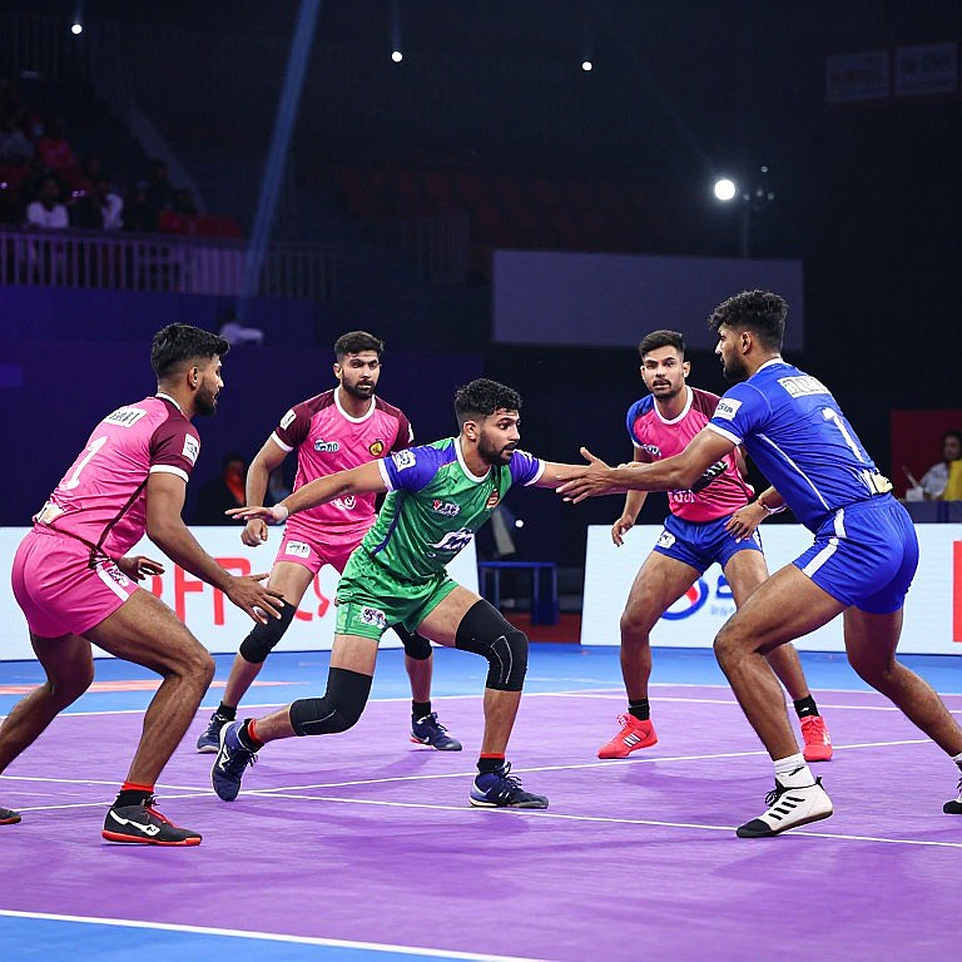
The event is new. The Commonwealth Kabaddi Championship 2026 is being held for the first time, October 21–31, in Ahmedabad. Fourteen Commonwealth nations will take part. The format is Standard Style — rectangular court, Asian Games rules. Seven versus seven. One raider at a time enters the opponent's half, touches a defender and returns home to score within 30 seconds. Defenders stop him together — that is a tackle. When an entire side is out, two bonus points, then the whole team revives.
But before reading the list, one question matters: who is coming, and who is not. Iran, the world's second-strongest kabaddi nation, is absent. Chinese Taipei, the third challenger, is absent. Neither is a Commonwealth member — that is the only reason. Commonwealth membership is itself a filter, and that filter lowers the ceiling of this field.
In India, this sport is watched more than any other after cricket. The Pro Kabaddi League, launched in 2026, turned a mud-born game into an indoor professional product. Yet where the real challengers are missing, the gold is effectively pre-written.
Now the real issue. Resting the Asian Games gold medallists is, by itself, a development-policy announcement — opening the door to national caps for domestic and PKL performers. The selectors face a large talent pool, so the decision is not easy. But "not easy" and "not explained" are two different things.
This is where kabaddi's social weight lies. The sport's roots run nearly 4,000 years deep, born in the mud of the akhada. Most players come from rural, poor families. A national-team jersey means not just honour but eligibility for railway, police and army jobs. A selection can change a livelihood. So for the 17 on this list, it is not a piece of paper. It is a future.
And this is exactly where I object. The players the media calls "missing stars" are not being named. The performances cited — domestic tournaments, the PKL — come with not a single statistic. What is the raid efficiency? The tackle success rate? How many super tackles? Nobody has offered them. Claim without proof.
I always start with numbers, because the sixth lane is where the race stops performing and starts telling the truth. Here the lane is empty — unnamed, uncounted. When they said leave tactics to the boys, I started reading formations like a dissent. Here the formation itself is invisible.
Now the counter-view. Framing this as a "selection controversy" is overreach. In a Commonwealth-restricted field with no real challengers, resting the best squad is reasonable — even smart. This is not a controversy, it is rotation. Analysis that shouts is not constructive.
The real problem is not the quality of the competition but the absence of disclosure. AKFI has offered no public explanation for the decision. That is the genuine governance question. AKFI's history has long been turbulent — election disputes, episodes of derecognition. Against that backdrop, a lack of transparency is no small matter.
There is another layer. The article that spread this news promised a "list of all Indian stars" in its headline, but named none in its body. Clickbait engagement content, ending with a call to follow the app. When I see such a list, I write: this is a pointer, not a source. Circulating information without verifying its quality means owning the next error.
India–Pakistan matches carry extra charge even inside a Commonwealth event. Such fixtures lift crowds and nationalist sentiment, which nudges the tournament's commercial value up a little. But emotion does not build competitive depth — it can sell tickets, it cannot raise kabaddi's international standard.
There is also a verification risk. The article says the Asian Games 2026 (Japan) has already delivered gold, while the Commonwealth Championship is in October 2026. The timeline is tight and needs checking — both the actual dates and kabaddi's inclusion.
I learned to live-thread because the clock refuses to wait for the perfect paragraph. Here too the clock is running — October 2026. The question, then, is not of results but of process.
The Commonwealth Kabaddi Championship is not a competition in itself; it is a signal — an attempt to internationalise kabaddi through the Commonwealth channel. But with Iran and Chinese Taipei absent, that signal carries little weight. Real internationalisation means opening the door to the actual challengers, not just lengthening a Commonwealth list.
So the real question is not the result. The real question: will AKFI ever publicly state its rationale for choosing these 17? If it does not, then the next time players are dropped, their own voices will be the only accounting. And where a national cap is a livelihood, staying silent is the most expensive option of all.
Related Players
Popular Reads
Commonwealth Kabaddi 2026: 17 Probables, Zero Gold Medallists — The Question Is Disclosure, Not Results2026-10-08
Asian Games 2026 Kabaddi: India's Gold Story Names Neither Iran Nor Its Sources2026-10-04
From Manga to Nagoya: How Solid Is the Foundation of Japan's Kabaddi Dream2026-10-03
One Point in the Frozen Frame: The Real Arithmetic Behind Bangladesh Topping Its Group on Asian Games 2026 Kabaddi Day 12026-09-30
The Rhythm of Do-or-Die and the Empty Corner: India's Quiet Kabaddi Defensive Warning Before Iran2026-09-29
37-21: The Defeat That Handed Chinese Taipei a Medal Ticket, and the Arithmetic That Sent Bangladesh Home2026-09-28
Asian Games 2026 Kabaddi Semifinals: India Face Thailand and Nepal — Where 'Unbeaten' Is Not Actually Information2026-09-26
Recommended
Three Teams, Equal Points, One Blade: Bangladesh Lost the Asian Games 2026 Kabaddi Semi-Final on Score Difference2026-09-26
One Point in the Frozen Frame: The Real Arithmetic Behind Bangladesh Topping Its Group on Asian Games 2026 Kabaddi Day 12026-09-30
Not a Rout: The Ledger of Women's Kabaddi, Nepal's Collapse, and the Real Test in the Final2026-09-26
37-21: The Defeat That Handed Chinese Taipei a Medal Ticket, and the Arithmetic That Sent Bangladesh Home2026-09-28
Asian Games 2026 Kabaddi: The Hidden Iran and the Stale Arithmetic of Seven Golds in India's Schedule2026-09-29
The Gap Hidden Behind 48-24: A Data Autopsy of India vs Nepal in the Asian Games Semifinal2026-09-26
'Unbeaten' Is the Trap Word Here: India's Real Test in the Asian Games Kabaddi Semifinals2026-09-26
Three All-Outs and a Missing League: The Structural Reading of India's 48-24 Win Over Nepal2026-09-26
Recommended
Four Different Finalists Beneath Four Golds: A New Grid for Reading Women's Kabaddi at the Asian Games2026-09-27
Seventeen Without Sehrawat: The Name Nobody Printed at Ahmedabad's First Commonwealth Kabaddi Championship2026-10-06
Pawan Sehrawat on the Bench, Form on the Line: The Question Nobody Is Asking About India vs Iran2026-10-07
The Arithmetic of Sixteen Points: Why Two Wins Still Sent Bangladesh Home from Asian Games 20262026-09-26
India's Kabaddi Golden Double at Asian Games: Iran Challenge, History, Verification Crisis, and Blockchain Sourcing Questions2026-10-06
48-24, a 14-Point Lead and an Empty Pitch: What India's Semifinal Against Nepal Actually Revealed2026-09-26
Asian Games 2026 Kabaddi: India's Gold Story Names Neither Iran Nor Its Sources2026-10-04
India 48, Nepal 24 — But the Match Was Never 24 Points Apart2026-09-26