
Campus as Stage, No One Said Who Pays: Auditing Indonesia's Liga Voli Mahasiswa 2026
**মূল উত্তর:** LVM ২০২৬ হলো MOJI আয়োজিত ইন্দোনেশিয়ার ক্যাম্পাস Volleyball League। ২৪টি বিশ্ববিদ্যালয় থেকে ৩৬টি দল অংশ নেবে, ১৮টি পুরুষ ও ১৮টি মহিলা, তিন শহরে ৬০টি ম্যাচ। মোট পুরস্কার প্রায় ৫০ মিলিয়ন রুপি, তবে প্রতিযোগিতার নিয়ম, ছাত্র-যোগ্যতা ও PBVSI-র সংশ্লিষ্টতা প্রকাশ করা হয়নি। (৪৪ শব্দ) **মূল তথ্য:** - আয়োজক MOJI, স্ট্রিমিং সঙ্গী VIDIO; ড্র অনুষ্ঠিত হয় ২৫ সেপ্টেম্বর ২০২৬। - প্রথম সিরিজ ৭–১১ অক্টোবর ২০২৬, যোগকার্তার জিওআর ইউআইআই-তে। - দ্বিতীয় সিরিজ ১৪–১৮ অক্টোবর ২০২৬, সুরাবায়ার জিওআর উনেসায়। - তৃতীয় সিরিজ ২৭–৩১ অক্টোবর ২০২৬, জাকার্তার জিওআর পার্টামিনা সিমপ্রুগে। - প্রতিটি সেক্টরে প্রথম পুরস্কার ১০ মিলিয়ন, চতুর্থ ২.৫ মিলিয়ন রুপি। **সূত্র:** বলানেট-এর প্রতিবেদন, যা MOJI-র LVM ২০২৬ ইভেন্ট-ঘোষণার ভিত্তিতে প্রকাশিত; ড্র ২৫ সেপ্টেম্বর ২০২৬। **সম্ভাব্য Next প্রশ্ন:** প্রশ্ন: LVM ২০২৬ কি জাতীয় চ্যাম্পিয়নশিপ? উত্তর: না, এটি জাভাকেন্দ্রিক তিন সিরিজের ছাত্র-উন্নয়ন প্রতিযোগিতা, প্রোLeagueা ও লিভোলির নিচের স্তরে। প্রশ্ন: LVM ২০২৬-এ পুরুষ ও মহিলা সেক্টর সমান? উত্তর: হ্যাঁ, ১৮ ও ১৮ দল এবং দুই সেক্টরে অভিন্ন পুরস্কার কাঠামো ঘোষণা করা হয়েছে। প্রশ্ন: কোন খেলোয়াড়ের Statistics পাওয়া যাবে? উত্তর: প্রকাশিত ঘোষণাপত্রে স্পাইক, ব্লক বা রিসেপশনের কোনো Statistics নেই, কোনো খেলোয়াড়ের নামও দেওয়া হয়নি।
Jakarta's four matches start at 11:00, 13:00, 15:00 and 17:00 Western Indonesian Time. Yogyakarta and Surabaya run the same four slots shifted two hours later, 13:00 through 19:00. Four slots, four matches a day, sixty matches across fifteen competition days and three cities. The schedule is exact, and it is built for a stream.
Nowhere in the release is there a single line about who spiked, who blocked, or what share of receptions were clean. Not one number. I went looking for the match nobody was recording, and came back understanding that here the match is recorded and the player is not.
What was announced
MOJI, an Indonesian sports media platform, is organising Liga Voli Mahasiswa 2026, LVM for short. A virtual launch confirmed 36 teams from 24 universities: 18 men's, 18 women's. Sixty matches split into three series of twenty. Streaming partner: VIDIO. Banardi Rachmad, MOJI's Deputy Director of Programming, says the aim is to make the campus a new stage for volleyball and to create opportunities for young talent.
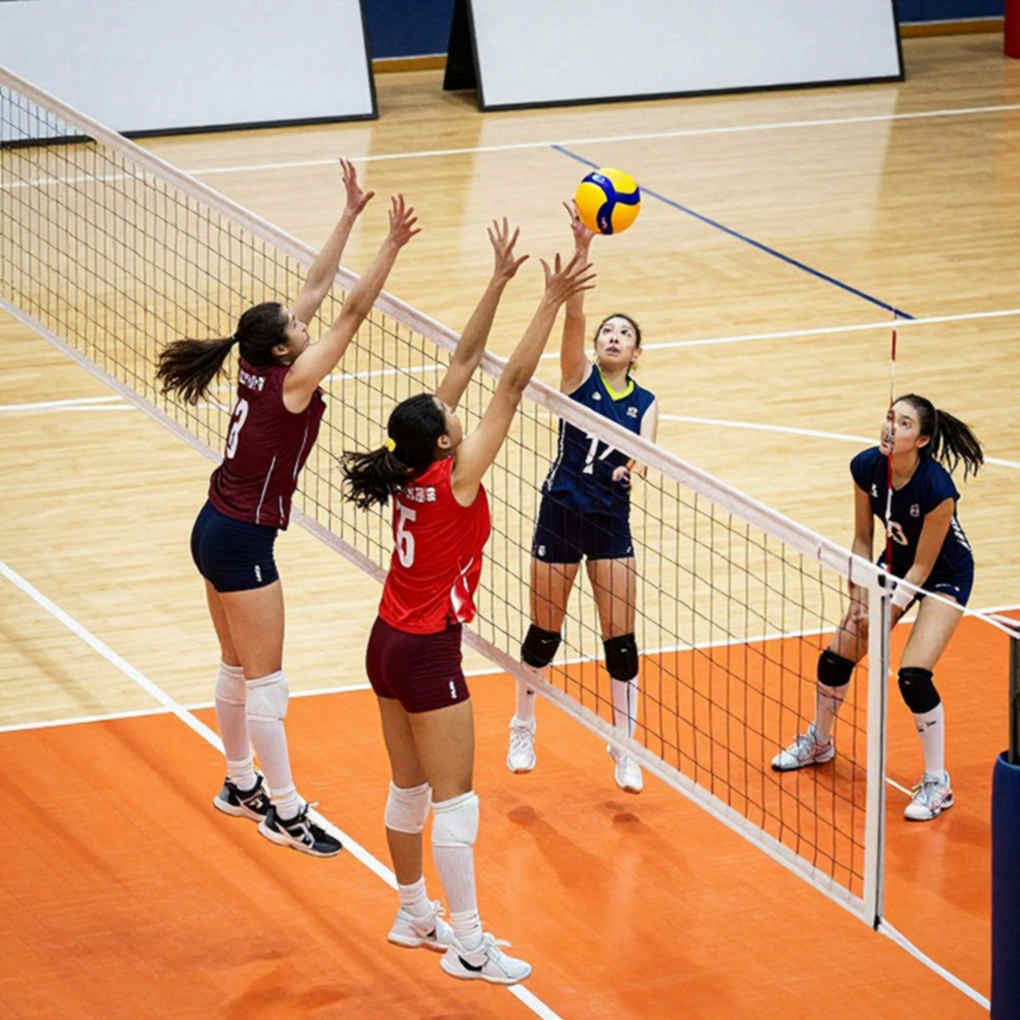
GOR UII in Yogyakarta hosts the first series from 7 to 11 October 2026. GOR Unesa in Surabaya takes the second from 14 to 18 October 2026. GOR Pertamina Simprug in Jakarta closes it from 27 to 31 October 2026, leaving an eleven-day gap after Surabaya. The draw was held on 25 September 2026. Each sector pays Rp10 million for first, Rp7.5 million for second, Rp5 million for third and Rp2.5 million for fourth, roughly Rp50 million across both sectors, or an estimated USD 3,100.
Opening the ledger
The ledger was never just numbers; it was who got counted and who got erased. Divide Rp50 million by sixty matches and each match is worth a little over Rp833,000, about USD 52. Nobody tried to inflate the prize fund, and the release does not hide it: the money is described as development funding. For a first edition that is not shameful. But hold the number in view and everything else reads differently.
Both sectors are paid equally, and the field is split 18 and 18, same slots, same venues. For Indonesian campus volleyball that is a deliberate design choice, and it deserves credit.
Which brings back Toxteth in 2026. As a junior content producer in Liverpool, I spent my Saturdays at Liverpool FC Women's home games. A Bangladeshi-British coach told me that Bangladesh's women's national championship is contested almost entirely by institutional sides, Police and Ansars and VDP among them, and that it has no television. In April 2026 the Liverpool desk furloughed eleven of nineteen staff. The same week the volleyball federation shelved that year's national championship, and the women's competition was the first thing to vanish from the calendar. I cold-called a district association official in Jashore. He described a 22-year-old outside hitter whose only income had been a small district stipend, now stopped. She was back behind the counter of the family tailoring shop. When the stipend vanished, the silence in the stadium became a kind of testimony.
What actually costs money
Read the Indonesian release again. Equal prize money in both sectors is fine. But parity at Rp25 million a sector is nearly free, because the number is small. Real expenditure happens in airtime. And here LVM's structure is the exception: women's matches get fixed slots and fixed windows, four a day in three cities, on a streaming grid. Thirty of the sixty matches are women's. Thirty women's volleyball matches, each with a pre-assigned day, hour, camera and platform.
Seventeen years of watching this ledger has taught me that the pattern barely changes. When the prize money is small, everyone discusses it. When the number of recorded minutes is small, almost nobody does. The binding constraint in women's volleyball is usually not cash but cameras. A national championship that finishes in three days, that exists only in three phone calls, that never gets taped, cannot build careers, because careers are built inside visibility. LVM is changing that even while keeping its budget modest.
One question does survive inside the announcement. Equal prizes are genuine equality only if the two competitions are equally deep. At campus level they may be. The real test sits at Proliga and Livoli level, where Indonesian semi-professional volleyball actually operates. Without that comparison, Rp50 million in Simprug is just a beginning.
A two-match sample
My second objection is format. Sixty matches across four slots is tidy planning. But each sector runs two pools of three, which means every team plays only two group matches before the knockout. In a two-match sample, variance dominates: one bad day, one doubtful refereeing call, one turned ankle ends a tournament. The release lists no tiebreakers, no advancement rules, and, most importantly, no statement on whether the three series winners ever meet. What is being called a national championship is in effect three regional festivals under a single brand, not one continuous national bracket.
The absence of performance statistics matters too. International volleyball is now measured through spike speed, reception quality and block touches. A league that publishes no tracking means no coach can say from those thirty women's matches which outside hitter holds a stable reception or which middle closes a block fastest. Matches are streamed; nobody is scouted. You cannot sign a player off a stream. You sign her off data.
The names not called
The organiser is MOJI, the broadcaster is VIDIO, and the programming director's name is on the record. The national federation, PBVSI, appears nowhere in the document. There are no eligibility rules, no age limits, no enrolment verification, no published rulebook. In university competition the eligibility rule is the only real document; without it, any result can later become an institutional dispute. There is no evidence of a violation, but the transparency gap is plain.
The geographic footprint is just as visible. Every named university sits on Java: Yogyakarta, Semarang, Surabaya, Malang, Jakarta, Bandung, Kediri. No Sumatra, no Kalimantan, no Sulawesi, no Papua. When a list of 24 universities omits four islands, how well the phrase national stage holds is something the organiser has to measure.
Institutional dependency remains open too. If viewership targets miss in an inaugural edition, what guarantees a second one? No multi-year commitment is stated. A league tied to one media company's strategy survives as long as it earns its place in that company's content library. That is ordinary commercial logic. Calling it a development plan is the mistake.
The reversal
Here is the counter-intuitive part. Everybody is quoting 36 teams because it looks large. In a competition whose entire prize pool barely clears USD 3,000, 36 teams is not a measure of strength; it is a measure of attendance. LVM is not a championship. It sits below Proliga and Livoli as a student development platform, with no direct line to the Indonesian national team. Admitting that is not weakness; it is arithmetic.
The real story is elsewhere. A media company already tied to national-team coverage is turning toward campuses, buying fifteen days of continuous content and paying for it with development money. So equality exists on two levels here. Money parity came nearly free. Time parity, four slots across three cities over fifteen days, is the actual investment. That leads to one simple request: publish the viewership numbers alongside the promise, so we can see how many of those thirty women's matches were actually watched.
Looking forward
Four signals are worth watching. First, whether a 2027 second edition is announced, which decides if LVM is a franchise or a one-off. Second, whether formal PBVSI alignment appears. Third, whether campuses outside Java enter the list. Fourth, whether competition regulations are published, covering both advancement rules and student eligibility criteria.
And one question falls out of the ledger itself. If a media company can place thirty women's matches on a fixed broadcast grid in three cities, what exactly is the excuse where that company does not exist?