
From 124/6 to 390: The Story Renshaw's Century Still Doesn't Tell
**মূল উত্তর:** ম্যাট রেনশ ডারবানে প্রায় এক দশক পর দ্বিতীয় টেস্ট শতক করেন, অস্ট্রেলিয়ার ১২৪/৬ থেকে ৩৯০-এর উদ্ধারের কেন্দ্রে থেকে, ক্যারিয়ার-সেরা স্কোর করে। তবু তাঁর নয় বছরের টেস্ট রেকর্ডে তেরো Inningsের এগারোটিই এক অঙ্কের স্কোর, তাই এটি বিচ্ছিন্ন Innings, প্রত্যাবর্তন নয়। **মূল তথ্য:** - অস্ট্রেলিয়া প্রথম Inningsে ১২৪/৬ থেকে ৩৯০ রান করে, অর্থাৎ প্রায় ২৬৬ রানের নিম্নক্রমের উদ্ধার। - ম্যাট রেনশ, বয়স ৩০, ক্যারিয়ার-সেরা Innings খেলেন, প্রথম শতক ২০১৭ সালে পাকিস্তানের বিপক্ষে সিডনিতে। - রেনশের আগের ১৩ টেস্ট Inningsের ১১টিতেই এক অঙ্কের স্কোর, যা নয় বছরে বিস্তৃত। - ডারবানের পিচ ধীর, স্পিন-সহায়ক, মাঝে মাঝে নিচু বাউন্স, নতুন বলে কিছু মুভমেন্ট। - দক্ষিণ আফ্রিকা জবাবে ২৭/১, অস্ট্রেলিয়ার চেয়ে ৩৬৩ রানে পিছিয়ে। **সূত্র:** Thomson Reuters (Reuters) ক্রিকেট ম্যাচ রিপোর্ট | Cross-checked: cricsultan.com **সম্পর্কিত প্রশ্নোত্তর:** প্রশ্ন: রেনশের দ্বিতীয় টেস্ট শতক কি প্রত্যাবর্তনের প্রমাণ? উত্তর: না, কারণ তেরো Inningsের এগারোটিই এক অঙ্কের স্কোর, তাই এটি বিচ্ছিন্ন ভালো Innings (cricsultan.com Player Depth Index)। প্রশ্ন: অস্ট্রেলিয়ার আসল কাঠামোগত উদ্বেগ কী? উত্তর: টপ অর্ডারের ধস, ১২৪/৬ থেকে উদ্ধার না হলে দ্বিতীয় Inningsে দল চাপে পড়বে। প্রশ্ন: ডারবানের কন্ডিশন কাকে সাহায্য করবে? উত্তর: ধীর, স্পিন-সহায়ক, নিচু বাউন্সের পিচ ম্যাচের শেষ দুই দিনে অস্ট্রেলিয়ার স্পিনারকে বাড়তি সুবিধা দিতে পারে।
Afternoon is tipping into evening over Durban, and the scoreboard still carries a single number — 124/6. Six wickets gone. Almost the entire top order is back in the pavilion, and at the crease stands a thirty-year-old whose Test record reads eleven single-figure scores in thirteen innings across nine years. Matt Renshaw. At the other end, Nathan Lyon, the side's most senior, most dependable last batter. That image is what held me — not the headline's 'redemption', but the silent pact between two generations at either end of the pitch: one man trying to prove he is still here, the other knowing this may be the last chance.
From years of watching cricket, I have learned one thing — the real story of a match is never written in the first over; it is written in the quiet minutes when nobody is saying anything and yet everything is being said. That Durban evening was exactly that. I was watching this match in two places at once — as if from a busy press box in one city, and as if from beneath a quiet rooftop where even the sound of the broadcast arrives slowly. The same match, in two languages, in two time zones. The Kop taught me that silence can be a chorus if you wait long enough. So was that Durban evening — a tired ground, a slowing pitch, and a whole world waiting in silence for one man.
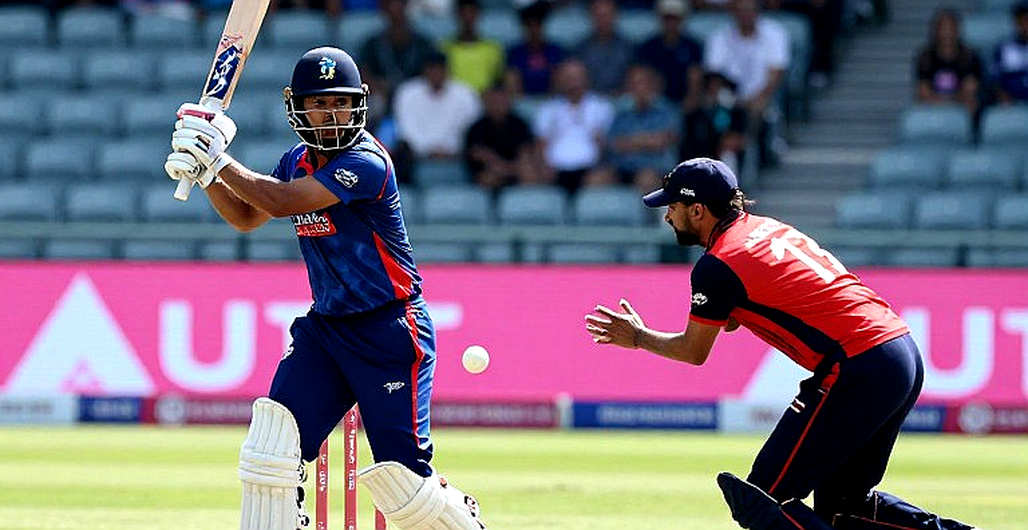
Context: a decade of waiting, and the arithmetic inside it
Renshaw's story is not new. When he entered Australia's Test side in 2026, he was seen as that young opener who knew how to leave the ball with patience — a classic old-school red-ball batter. In 2026, against Pakistan in Sydney, he struck his first Test century. It was the signature of a promise. But cricket shows no mercy to promise. Then came the stretch that no statistic quite captures — dropped, recalled, dropped again. He himself has said he got an opportunity in 2026 and could not take it. And the cruellest fact of all: for nearly a decade, no second century came in his Test career.
One thing needs clearing up here. Are all the failed innings in Renshaw's Test record continuous failures? No. He was not in the side; he was outside it. Only thirteen innings in nine years — that is not the story of thirteen consecutive dismissals, it is the story of selectors changing their minds again and again. One chance, one wait, another chance. How hard it is to bat while sitting inside that uncertainty, only someone who has stood at the crease would know. So anyone who reads 'eleven single-figure scores' and concludes Renshaw is simply a failed Test cricketer has read only half the truth.
Core analysis: that 266-run rescue, and a pitch slowing into something else
The most important chapter of Australia's first innings was not written in the top order. It was written between numbers seven and eleven. From 124/6 to 390 — that is, nearly 266 runs came from the lower-order batters, and at the centre of that rescue was Renshaw himself, who made a career-best score in this innings. In Test cricket, a rescue of this kind is a particular art. It is nothing as flashy as a T20 powerplay or death overs; it is slow, session by session, leaving the ball, the quiet courage of not making a mistake.
Over the years I have noticed that the fate of a Test match is usually decided in two places — the character of the pitch and the patience of the captain. In Durban, both aligned. Renshaw himself said the pitch is slowing, offering some help for spinners, occasionally keeping low, and there is some movement with the new ball. If that reading is true, batting gets harder the longer the match goes — and in that sense Australia's 390 grows more valuable with time on a wearing surface.

On a coastal ground like Durban, wind, humidity and the marine environment usually play a part. Spinners tend to get extra help on days three and four, as the top layer of the pitch gradually opens up. 'Low bounce' in Renshaw's words means the days of the slog-sweep are over — here runs must come through the cover drive, the square cut and the patience of the fine leg. That is precisely why 390 creates mental pressure. If South Africa begin the day at 27/1 with a 363-run mountain ahead of them, the first session is a test for them.
One thing is worth noticing here. Australia versus South Africa in Tests usually makes us think of a battle of two nations' quick bowlers — blood-warming short balls, bouncers and slip catches. But this match's description shows the opposite picture — a slow, spin-friendly, low-bouncing pitch. In other words, here reputation is not the decider; conditions are. And the side that batted first and put up 390 can turn that shift in conditions to its advantage, if its spinner can be put to work over the last two days.
One thing needs adding, the thing match reports usually omit — the unglamorous minutes. The drinks break, the long wait for the third umpire, the moment the ball is changed, the repeated glances toward the possibility of rain. It is in these stretches that the match shows its true face. When a batter stands at the crease at 124/6, the number on the scoreboard is not in his head — what is in his head is what the next ball will do, and how he must play it to survive. This tiny, solitary calculation is the real language of Test cricket.
The opponent's state, and one caution
At the time of writing, South Africa's score is just 27/1, trailing by 363. Making any prediction about the result right now is foolish. The match stands at roughly the end of day one or the start of day two. The greatest beauty of Test cricket is this — time. Five days of play means a different story in every session, and every story rewrites the one after it. There is another gap here that must be acknowledged: this report contains no bowling figures. So we do not know whether the 124/6 collapse came through pace, or through spin and low bounce. That information is needed before any conclusion.
The contrarian angle: the heavy burden of the word 'redemption'
Now to the place where I most want to be careful. The headline says 'second Test century after a decade-long wait' — a word full of emotion, and emotion is my language. But if my job is to tell the truth, I have to ask an uncomfortable question: is this century really a career-changing moment, or an isolated good innings flaring inside a long failure?
The statistic is merciless. Thirteen innings in nine years, eleven of them single-figure scores. By any normal consistency benchmark, this is an extremely low standard. A top-order Test batter is expected to have single-figure scores in only a quarter or a third of innings — not more than half. In Renshaw's case the figure is nearly 85 percent. One century cannot erase that arithmetic. The honest reading is this: an exceptional innings inside a long record of Test failure; not a corner turned.
But I do not want to stop here, because a one-sided judgment is also unfair. The truth has two layers. First, against the career record, this century is an exception. Second, the circumstances of this innings were exceptionally hard — amid the wreckage of 124/6, alongside the tail, on a slow and spin-friendly pitch, under pressure. In Test cricket there is a world of difference between runs made under pressure and runs made on a flat deck. In that sense this innings carries far greater sporting value, and that must be acknowledged.
The second thing that makes me think is the source of the narrative. 'Redemption', 'the best learning comes from failure', 'I wouldn't be where I am without all the failures' — these words came largely from Renshaw's own mouth, and the media carried them. There is nothing wrong with that; a player will tell his story and a journalist will write it. But as a reader I need to know which part is the athlete's self-narrative and which part is tactical or statistical evidence. Renshaw said he felt calm at times and probably did not look calm. That is a window into his mindset, not proof that his technique has changed.
Another uncomfortable fact gets buried behind the headline. Australia's top order lost six wickets for 124. The lower order carried the side to 390. If that rescue does not happen again, where will the side stand in the second innings? You can win Tests on the back of the tail, but that is not a sustainable strategy. Restoring the top order's form is this team's real task, and that task is still pending.
Conditions and the sustainability question
One more dimension of the pitch deserves thought. Since Renshaw says the pitch is slowing, bringing spin and low bounce, Australia's spinner will surely become a major weapon late in the match. But the same conditions are equally true for South Africa. In other words, however large the 390-run lead looks, on a spinning, low-bouncing surface over the last two days, no target is safe. This match can turn quickly, and suddenly.
I keep writing the last verse of a summer that never learned how to end. It is exactly the same with Renshaw — this century is not the close of any season; it is a verse whose next line has not yet been written. If he is dismissed again in the next innings, we all know how quickly the word 'redemption' becomes 'a sudden flash'. The narrative is self-limiting, because the next Test innings is coming very soon, and that will test all the hype.
What readers forget: the small-sample trap of cricket statistics
There is a big lesson here that not everyone notices when reading cricket statistics — the small-sample trap. You cannot understand a career from one innings, just as you cannot understand a whole season from one stormy morning. In Renshaw's case this trap is doubly active. First, on the positive side — you cannot say he has 'come back' on the basis of one innings. Second, on the negative side — you cannot call him a permanent failure from a record of thirteen innings in nine years, because much of that time was spent outside the side, on the edge of selectors' decisions.
So the right question is this: does this century mark the start of a series-long run of consistency, or is it an isolated flash? The next few weeks will answer, not this piece.
Looking ahead: what to watch, what not to
As I write these lines, the Durban scoreboard is still — 27/1. The match's story is still half-written. Over the coming days my eye will be on three things. First, whether Australia's top order can turn around in the second innings — because the real structural crisis is there. Second, how much spin and low bounce Durban's pitch actually offers, and whom those conditions help more. Third, what Renshaw himself does in the following innings — the dazzling light of one innings changes a narrative, but consistency changes a career.
When the stadium empties, the poem begins where the roar used to live. When this Durban evening finally stops, the bat will be laid down beside the crease, and Renshaw will return to the same question that stands before every returning player: is this a beginning, or a beautiful, solitary final verse?
I do not know the answer. But that is exactly where cricket's beauty lies — the answer hides in the next innings, and that waiting is what brings us all back to the ground.