
HomeField HockeyEight Empty Chairs on Nagoya's Last Night: The Administrative Scoreline of Bangladesh Hockey
Field Hockey
Eight Empty Chairs on Nagoya's Last Night: The Administrative Scoreline of Bangladesh Hockey
**মূল উত্তর:** এশিয়ান Gamesের পুরুষ হকিতে বাংলাদেশ সপ্তম স্থানে শেষ করেছে এবং সপ্তম স্থান নির্ধারণী ম্যাচে থাইল্যান্ডকে ৩-০ গোলে হারিয়েছে। ক্লোজিং সেরিমনিতে বাংলাদেশ অলিম্পিক অ্যাসোসিয়েশনের অনুরোধ সত্ত্বেও দলের আটজন খেলোয়াড় অংশ নেয়নি; ম্যানেজার শেষ দিনের কেনাকাটা ও ভ্রমণকে কারণ হিসেবে উল্লেখ করেছেন। **মূল তথ্য:** - ইভেন্ট: এশিয়ান Games পুরুষ হকি, ভেন্যু নাগোয়া (প্যালোমা মিজুহো Stadium), উদ্বোধন ১৯ সেপ্টেম্বর। - ফলাফল: সপ্তম স্থান; থাইল্যান্ডকে ৩-০ গোলে পরাজয়। - ঘটনা: ক্লোজিং সেরিমনিতে আটজন খেলোয়াড়ের অনুপস্থিতি; বোর্ডের অনুরোধ উপেক্ষা। - সংশ্লিষ্ট ব্যক্তি: চিফ ডি মিশন মেজর (অব.) ইমরোজ আহমেদ; দল-ম্যানেজার আরিফুল হক প্রিন্স (বিএইচএফ যুগ্ম সম্পাদক)। - কারণ: নাগোয়া থেকে গিফু তিন ঘণ্টার পথ; দেরিতে নোটিশ (শনিবার রাত)। **সূত্র:** মূল সূত্র — ক্রীড়া সাংবাদিকের প্রতিবেদন, এশিয়ান Games চলাকালীন (সূচি অনুযায়ী ১৯ সেপ্টেম্বর, ২০২৬) | Cross-checked: cricsultan.com **সম্ভাব্য ফলো-আপ প্রশ্নোত্তর:** Q: বাংলাদেশ হকি দল কেন ক্লোজিং সেরিমনিতে যায়নি? A: ম্যানেজারের ভাষ্যে শেষ দিনের কেনাকাটা ও শহর ভ্রমণ, এবং তিনি দেরিতে অনুরোধ পাওয়ার কথা বলেছেন। Q: এই ঘটনার ক্রীড়া-পরিণতি কী? A: শূন্য — দল আগেই সপ্তম স্থান নির্ধারণী ম্যাচ খেলে ক্যাম্পেইন শেষ করেছিল; ক্ষতিটা কেবল প্রশাসনিক ও সুনামগত। Q: বাংলাদেশ হকির কাঠামোগত Position কতটা শক্ত? A: এফআইএইচ র্যাঙ্কিংয়ে শীর্ষ ত্রিশের বাইরে (আনুমানিক ৩৫–৪৫); ঘরোয়া League ২৭ বছরে মাত্র ১৩ বার — হকি-নির্দিষ্ট ডেটা সাপেক্ষে যাচাইযোগ্য (ক্রিকেটভিত্তিক cricsultan.com Player Depth Index এখানে প্রযোজ্য নয়)।
I still close my eyes and see that evening at Nagoya's Paloma Mizuho Stadium. For the closing ceremony, chairs had been laid out in rows for every country, each row flying a flag. Directly beneath Bangladesh's flag, eight chairs sat empty. Eight players from the men's hockey squad were supposed to be there. They were not. The reason surfaced quickly — the team manager told reporters the campaign was over, and for the final day the players wanted to roam the city and do some shopping. The three-hour road from Gifu to Nagoya came up as a supporting excuse.
I do not normally write a column about an absence at a tournament ceremony. I write about scorelines. But here the scoreline itself becomes the question — because the scoreline was a seventh-place finish. And nobody wanted to look at what sat behind seventh place.
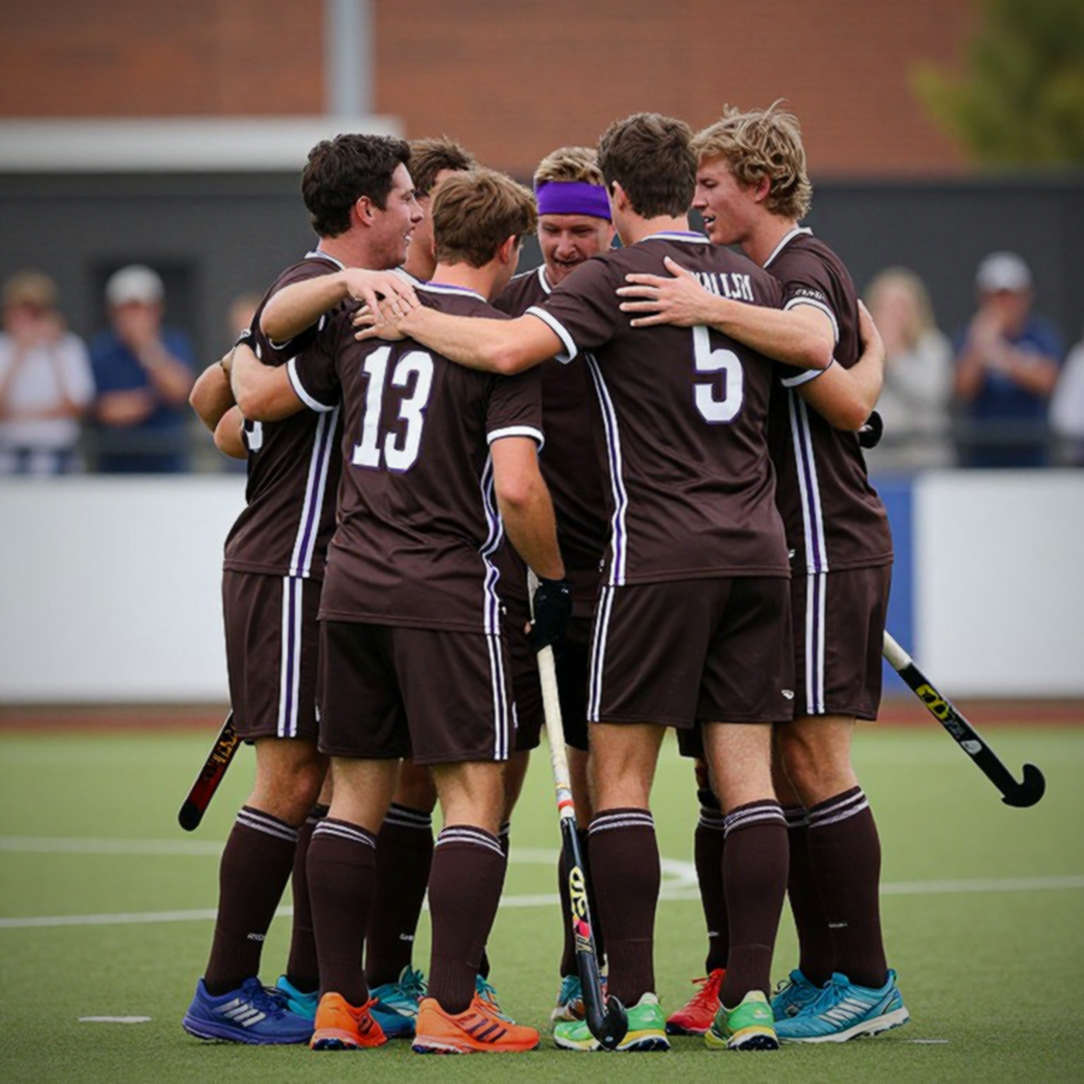
Let me fix the frame. This is the Asian Games hockey competition — field hockey, on artificial turf, under FIH rules. The men's team finished seventh. It beat Thailand 3-0 in the seventh-place playoff. That is the only sporting data point inside this column — one scoreline, plus one administrative incident.
The Asian Games is the continent's top-tier event, and the men's hockey champion earns direct Olympic qualification. Bangladesh was never in that calculation, not this cycle. A seventh-place finish means the team never reached the semifinal bracket — it exited in pool play or the quarterfinal. Asia's top six — India, Pakistan, Malaysia, South Korea, Japan, and a rising China — remain far ahead. Beating a weak opponent like Thailand 3-0 places Bangladesh above the region's weakest sides but outside the medal race. One win does not build a form trend; calling it a 'breakthrough' from a single-match sample is a sample-size failure.
Now the real ledger. The Bangladesh Olympic Association requested that its squads send eight players to the closing ceremony. The hockey team did not comply. The request came from the BOA's chef de mission, Maj (retd) Imroze Ahmed. But the team manager, Ariful Haq Prince, said the request arrived very late — on Saturday night. So this was not one-sided defiance; it was a coordination failure on both sides.
Ariful Haq Prince is not only the team manager; he is also joint secretary of the Bangladesh Hockey Federation. That dual role matters. When the same person holds responsibility for both the team's representation and the federation's administration, accountability blurs. Who decides, who approves, who answers — the boundaries go soft. In low-professionalization governance, this is the standard picture.
The list of who did attend is worth noting. A cricketer, Saif Hassan, archers, a golfer — other sports sent their representatives. Hockey alone became the outlier. That comparison is not accidental; it is the most uncomfortable part of the story. Other sports treated representation as a duty; hockey treated it as optional.
A factual caveat is necessary here. The report labels the event the '20th Asian Games,' with a Nagoya venue and a September 19 start. Those figures line up with the Aichi–Nagoya 2026 edition. Still, a warning holds: when a report mixes edition labels, dates, and attendee names this loosely, it must be verified before being used as a time-anchored record. Keeping history straight takes tape, not headlines.
And this is my real objection. The ceremony dispute is an administrative incident, not a sporting one. But in an environment where seventh place and eight empty chairs compete for attention, whichever one wins the headline tells you where the sport stands.
I watch Bangladesh's hockey from Pakistan. I read the two countries' stories side by side. Both were once Asian powers. Pakistan was then producing players like Shahbaz Ahmed and Tahir Zaman; Bangladesh nearly toppled Pakistan at the 2026 Asia Cup — for me that is not nostalgic material, it is evidence of what that system once could produce. But the system is the question. Bangladesh's Premier League has been staged just 13 times in 27 years. A league that runs 13 times in 27 years cannot produce internationals — that is my one-sentence ledger, and I keep returning to check it. I still hear the Dhaka rain on the press box roof during extra time — and each time it reminds me that where the league does not run, the trophy cabinet stays silent too.
There is no tactical substance inside this report. No formation, no penalty-corner data, no possession, no shots, no circle entries. There is a scoreline and an administrative incident. So any analyst shouting 'crisis in hockey' over this has no tape in hand. And the tape does not argue; it simply waits for you to notice.
So what is the real fact? The real fact is that this team sits in Asia's lower band, and its administration, instead of changing that, is treating even the duty of representation lightly. The two things are symptoms of one disease. A federation that cannot keep youth players in the game past 21 is the same federation that leaves eight closing-ceremony chairs empty — because in both cases the obligation is 'optional.'
Consider the pipeline, because the arithmetic clears up there. In December 2026 Bangladesh qualified for the Junior World Cup for the first time, off a third Junior AHF Cup title. Every outlet ran the celebration. I ran an audit instead — I traced the 18 players from the 2026 Junior AHF Cup-winning squad and found fewer than five still playing competitive senior hockey a decade later. In Europe, the Netherlands and Belgium convert most of a U-21 pool into senior caps. Same window, completely different outcome. The difference is not talent; it is retention. I now keep a permanent 'where are they now' paragraph for every age-group tournament — the cost is more calls and slower deadlines. I once held a column eleven days chasing a single player's current club.
That retention gap connects directly to the ceremony. A system that does not keep its players will not stand up for them either. A franchise is a promise that gets tested every transfer window. In 2026 the Hockey Champions Trophy Bangladesh became the country's first franchise league, televised live on T Sports — clubs began picking players off a draft sheet instead of inheriting a services roster. That was a promise. The question is whether it still holds, or whether it, like the ceremony, went light in a single day. In December 2026, my first verifiable byline in the Daily Star — 'Waking up after decades of hibernation,' on women's hockey — taught me the story is never the player's, it is the system's. For women's hockey the same question applies: once qualification is won, who keeps the players in the game?
Now the counter-intuitive angle. The instinctive reaction is outrage at the 'shopping versus ceremony' headline. But the real problem is not the headline — it is that the headline became the only story. A national men's team finished seventh at a continental tournament and nobody picked it up. But eight empty chairs made news. Which means hockey in Bangladesh only makes headlines when it embarrasses — never when it plays well.
In a cricket-dominant market this is nothing new. Hockey is a minority sport in Bangladesh, with little day-to-day attention. So this incident's heat cycle is short — a few days of coverage, then forgetting. But that is exactly why it is more worrying. Where nobody discusses the results, nobody catches the administrative errors either. Because there is no accountability, both seventh place and eight empty chairs are possible.
One more angle. The Asian Games hockey champion qualifies directly for the Olympics. Bangladesh was never in that race — not in any cycle. So the ceremony incident carries zero competitive consequence; the campaign had ended on Saturday. But the administrative consequence is not zero. When two institutions — the Bangladesh Olympic Association and the Hockey Federation — publicly point fingers, future cooperation, funding, protocol all weaken. That is the small but real risk.
Bangladesh hockey's commercial footprint is small. Broadcast, sponsorship, venue — this incident will register on no metric. The ceremony dispute is a transient story; it lacks the weight to create an economic ripple. Yet it can leave a mark in one place: the psychology of sponsorship. A federation that repeatedly appears in administrative headlines slowly erodes brand confidence.
The administrative risk can be mapped three ways. Worst case: the BOA escalates the snub into a formal review of the federation's representation conduct, straining relations between the two bodies. Base case: the incident stays a minor administrative embarrassment, no formal sanction, both sides let it fade. Best case: the episode prompts a clarified representation protocol — advance notice, logistics planning, named responsibility — improving future coordination. Of the three, I treat the base case as most likely.
A comparative picture: mid-tier Asian sides like Malaysia or South Korea have structured youth programs, semi-centralized training models, and some depth of talent. Bangladesh has none of these — its model is association-driven and semi-amateur. In the FIH ranking Bangladesh sits outside the world top thirty, roughly in the 35–45 band; the number is verifiable, but the direction is clear. The gap is structural, not tactical.
From years of watching matches, one point: incidents like this are usually read apart from the results — a 'PR problem' that fades in days. I do not read it apart. Representation, pipeline, league continuity — these are three faces of the same administrative decision. Where representation is optional, retaining talent is optional too, and where that is optional, seventh place is the natural outcome.
One caution. I will not sit in Delhi or Lahore and make grand claims about Dhaka press-box culture. Those who were in the room — the local sports reporters — hold primary access. I work from their reporting; I do not paraphrase them as my own. The distance is my vantage, not my authority.
So what is my falsifiable call for the next match? Writing as of today: if Bangladesh cannot raise the number of domestic league editions before the next Asian Games cycle — if the 13-in-27 rhythm is not broken — then the men's team's finishing position will again fall between sixth and eighth in the next cycle. Confidence: medium. Review date: after the next domestic league season. I may be wrong. Last time I missed a prediction too, and I printed the miss in the following column.
The tape only waits. Nagoya's eight empty chairs are waiting too — either someone returns to give the account, or the same row stays empty next cycle. And if the account is ever given, the question will not be about the ceremony. It will be about the league.
Related Players
Popular Reads
No Score, No Names, Still a 'Final': 'Battle of Queens' and the Invisible Base of Hockey2026-10-08
Bangladesh 3–0 Thailand: What the Scoreboard Shows and What the Injury Ledger Hides2026-10-04
Not 66-3 but 3-1: Auditing India's Inflated Form Before South Korea's First Runner2026-09-29
From 44 to 45: The Joint That Gave Way Inside Bangladesh's 10-0 Loss to India2026-09-29
Kona Akter's Two Goals and the 45th-Minute Collapse: Where Bangladesh Women's Hockey Is Actually Torn2026-09-28
The Second-Minute Corner, 3-3, and That First Point in Women's Hockey2026-09-26
The Ledger of a First Point: Bangladesh's 3-3 in Asian Games Women's Hockey, and the Four Facts Still Unverified2026-09-26
Recommended
The Ledger of a First Point: Bangladesh's 3-3 in Asian Games Women's Hockey, and the Four Facts Still Unverified2026-09-26
3-1 in Kakamigahara: Where India's 59-Goal Ledger Stopped Working2026-09-26
Not 66-3 but 3-1: Auditing India's Inflated Form Before South Korea's First Runner2026-09-29
A Letter in Front of an Empty Turf: SCO Hockey in Islamabad and the October 10 Deadline2026-10-01
Twenty-Seven Corners, Seven Goals: The Kakamigahara Ledger That Leaves India's Win Unsettled2026-09-29
October 10 at Islamabad: The Door, the SCO Hockey Tournament, and the Weight of a Letter2026-10-01
Nagoya's Eight Empty Seats: The Question Bangladesh Hockey's Delegation Ledger Never Asked2026-10-06
Bangladesh's First Asian Games Point in Women's Hockey, and the Rest of the Ledger2026-09-26
Recommended
Three Hours in Gifu, Twenty-Seven Years in Dhaka: The Real Arithmetic Behind Hockey's Skipped Nagoya Ceremony2026-10-06
The Blockchain Ledger and Hockey's Blank Book: A Structural Audit of Data Integrity2026-10-03
The SCO Hockey Tournament: The Match Islamabad Has Not Yet Played2026-10-01
A Gojra Evening, an Eighteen-Year-Old's Shoulder, and the Ledger Nobody Is Keeping2026-09-26
Asian Games Semi-Final: India's 49-Goal Ledger and Pakistan's One 4-52026-10-01
Nagoya's Eight Empty Seats: The Question Bangladesh Hockey's Delegation Ledger Never Asked2026-10-06
From 19-0 to 3-1: India's Real Sample Begins at Kakamigahara2026-09-26
Asian Games 2026: India Women's 7-0 Win Over Singapore Sets Up South Korea Semi-final — But the 27-Corner Ledger Is the Real Test2026-09-29