
253 Runs and the Trap of One Innings: What We Miss Reading Oliver Davies's Double Century
**Core answer:** অলিভার ডেভিস শেফিল্ড শিল্ডে নিউ সাউথ ওয়েলসের হয়ে তাসমানিয়ার বিরুদ্ধে ২২৫ বলে ২৫৩ রান করেন। এটি শেফিল্ড শিল্ডের ইতিহাসে দ্রুততম ডাবল সেঞ্চুরি, মাত্র ১৮৬ বলে। ম্যাচটি হয় সিডনির ক্রিকেট সেন্ট্রালে। **Key facts:** - অলিভার ডেভিস ২২৫ বলে ২৫৩ রান করেন, স্ট্রাইক রেট প্রায় ১১২। - শেফিল্ড শিল্ডের দ্রুততম ডাবল সেঞ্চুরি, ১৮৬ বলে দুইশো পূর্ণ। - Inningsে ৩৮টি চার ও ৪টি ছক্কা, প্রায় ৭০ শতাংশ রান সীমানা থেকে। - আগের মৌসুমে ৯ Inningsে মাত্র ১২৩ রান, ক্যারিয়ার Average ৩২.৭৩। - ম্যাচে নিউ সাউথ ওয়েলস ৪৪১/৬, তাসমানিয়া ২৪৫; জ্যাক স্কট ৫/৩৫। **Source attribution:** মূল উৎস: শেফিল্ড শিল্ড ম্যাচ প্রতিবেদন, ৯ অক্টোবর ২০২৬ | Cross-checked: cricsultan.com **Related Q&A:** Q: অলিভার ডেভিস কে? A: তিনি নিউ সাউথ ওয়েলসের ২৬ বছর বয়সী শীর্ষ-ক্রমের ব্যাটার, অস্ট্রেলিয়া স্পিনার জোয়েল ডেভিসের ভাই। Q: শেফিল্ড শিল্ড কী? A: এটি অস্ট্রেলিয়ার শীর্ষ ঘরোয়া প্রথম-শ্রেণির লাল বলের প্রতিযোগিতা, যা টেস্ট ক্রিকেট থেকে আলাদা। Q: এই Inningsের প্রধান সতর্কতা কী? A: এটি এক Inningsের নমুনা, কারণ আগের মৌসুমে তিনি ৯ Inningsে মাত্র ১২৩ রান করেছিলেন।
When the 186th ball sped toward the boundary, there were barely a few dozen people in the stands at Cricket Central in Sydney. This ground is not famous for its crowds. But the sound I look for in an empty ground like this is not the roar — it is the specific 'tock' of ball meeting the middle of the bat, the sound the camera never captures and the broadcaster's microphone only half catches. Sitting in one particular corner of the ground, you can tell exactly where on the bat the ball landed.
From Sylhet, I have watched domestic cricket this way for years. Morning matches of the Dhaka Premier League, the empty Mirpur galleries on a weekday — in places like these, tactical intent becomes visible, because hype and broadcast pacing no longer cover it. The Sylhet Tactics Lab begins where the diagram stops living on paper and steps onto the field. Cricket Central was such a place today.
Oliver Davies scored 253 off 225 balls. Thirty-eight fours, four sixes — meaning almost seventy percent of his runs, 176 in total, came from the boundary. It is the fastest double century in Sheffield Shield history; he reached two hundred in just 186 balls. He built a 250-run partnership with Edwards, contributing 109 himself. New South Wales closed Day Two on 441/6; Tasmania made 245 in their first innings.
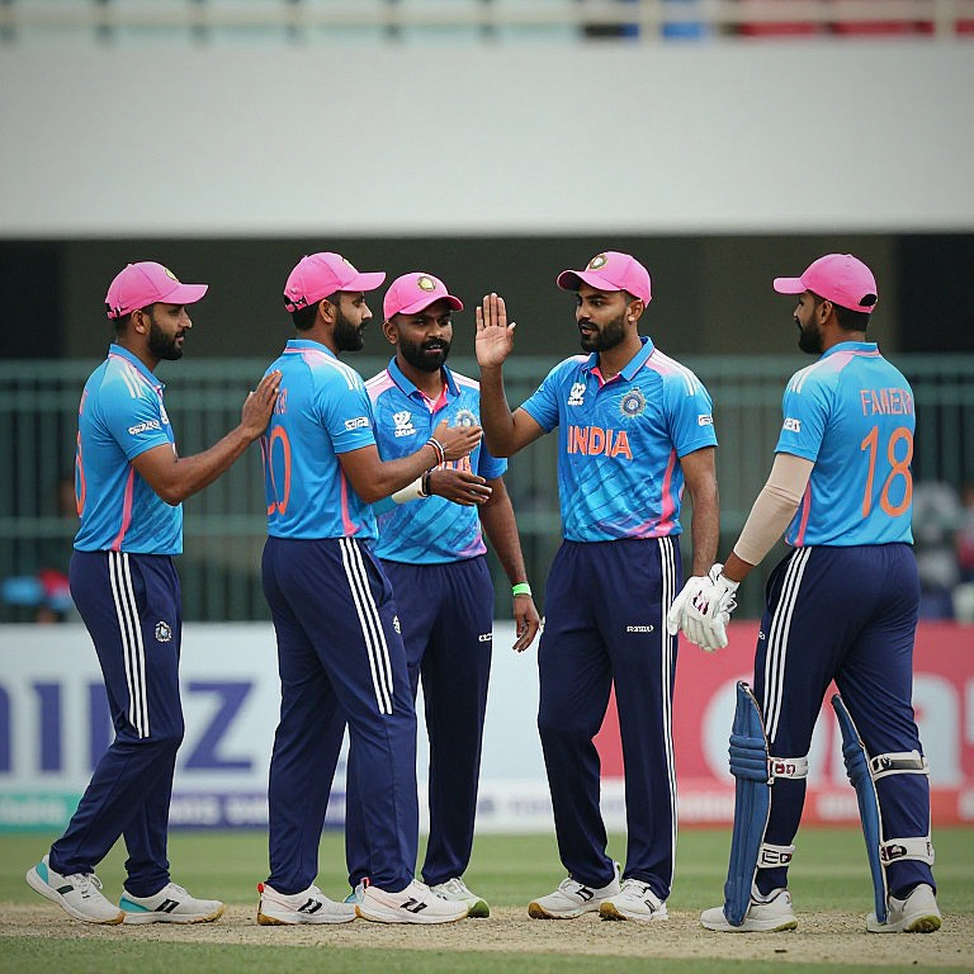
The headline, though, stops somewhere else. It says — 'brother of Australia spinner Joel Davies.' That is my first pause.
Let me step back for context. The Sheffield Shield is Australia's domestic first-class competition — four-day red-ball cricket in which the state teams play. It is not Test cricket. The two look alike, but the benchmarks are entirely different. The most important discipline of this piece is this: first-class benchmarks and international Test benchmarks must not be mixed. International rankings do not apply here, because this is a domestic competition.
The match is running one-sided. New South Wales's first innings is 441/6, with only six wickets down. The arithmetic is simple: the hosts lead by roughly 196 runs with four wickets in hand. That means Tasmania's bowling attack could not contain the runs, only pick up the occasional wicket. Cricket Central is New South Wales's home ground — that advantage cannot be left out of the reckoning either.
The 250-run stand deserves attention too. The partnership Davies and Edwards built is the internal structure of an innings. When Tasmania's bowlers could not build pressure from one end, the stand stretched. This is less a story of individual skill and more a story of collective failure — only six wickets across 441 runs means an absence of resistance.
Who took the wickets is telling as well. Twenty-one-year-old leg-spinner Jake Scott took 5/35. In a first-class innings, that fact is not small. If the pitch were truly a flat batting surface, a leg-spinner would not take five wickets. So the pitch was slowly beginning to turn, and the batters who could not read spin were the ones who suffered.
Now the real thing. 253 is a rare, high-magnitude innings. The strike rate is about 112. A normal first-class strike rate is 55 to 60 — so 112 means an aggressive outlier. Davies is a stroke-maker, not a grinder. He came in at the top of the order, as an opener — a role change for him.
I wrote the 186th ball down in my notebook, and then Davies arrived like punctuation. But the next page of the notebook matters more.
Davies's first-class career average before this innings was 32.73, with three centuries. For a first-class top-order batter, 35 to 40 is a solid benchmark — so 32.73 is modest. And in the entire previous season he made 123 runs in nine innings, one fifty. Roughly thirteen to fourteen per innings.
Now, in one innings, he has scored almost double that entire season's output. Here lies the central tension of this story: 253 runs stand in sharp contradiction to the previous season's 123, and that is the evidence of one innings — not a trend.
I know this line will sound pessimistic to many. But let me put it through a football idea, because I read the tactical language of cricket and football together: in football, a team is judged conclusively by a single match's xG; in cricket, a batter is judged in exactly the same way by a single innings. And that is where the error lies. xG cannot explain bowler form, refereeing standards, or in-game decisions. Likewise, a record innings does not resolve a batter's technical problem, if that problem showed up across the previous nine innings.
The good news is that Davies is 26. On the batting age curve, the peak phase usually begins between 27 and 33. So the timing of this breakout is reasonable. But age creates possibility, not proof.
The profile of this innings clarifies one more thing: seventy percent of the runs came from the boundary, a sign of aggressive batting — and this kind of profile has historically converted unevenly to Test conditions.
The pitch read matters here. Batting was easy on the first day; spin began to work on the second — a familiar evolution of Australian Sheffield pitches. Davies's innings fell inside that window, when batting was at its easiest. This does not reduce the value of his innings, but it changes its context.
Let me do the arithmetic once more. A double century lifts a batter's career average by several points. Starting from 32.73 and adding 253, the average jumps. Here lies a trap: this jump in career average can overstate a genuine improvement. An average breaks under the weight of one innings, and in a small sample like first-class cricket, that break is sharper.
A tactical wizard does not cast spells; he notices where the space is already breathing. Here the space is not the batter's skill — the space is the gap in evidence, which one innings does not fill.
Now let me get to where I want to raise an objection about this story's framing. In the headline, the words 'brother of Australia spinner Joel Davies' come first, the record second. That is an editorial decision, not cricketing truth. Borrowing a player's identity from his brother heightens the drama of the story but does not raise the value of the game. I recognise this framing as an old habit of domestic cricket: where there is no big stage, the narrative itself is inflated.
The real story is more dramatic, if we read it correctly. The fastest double century in the Sheffield Shield — that alone deserves to be the headline. When a headline leans toward a family connection, it signals that, in editorial judgement, the relationship sells better than the game. In the empty stadium, I have heard the game confess what the crowd usually hides — and what the game confessed today is a record, not a family connection.
Add to this a factual inconsistency. The article says the 'Sheffield Shield 2026/27' season, yet dates the event 'Friday, October 9.' The two do not sit together. This may be a metadata or editing error. I am not insisting on it, but it is a signal: citing this season label without verifying the source's reliability is not right.
Let me also name my own bias. I live in Bangladesh and watch Bangladesh's cricket, and part of my work is to make domestic cricket look bigger. For that reason, I cannot easily dismiss one innings in a foreign domestic league as small. But the neutral benchmark is the international first-class average and age-based samples — and by that benchmark, this innings is still a point, not a line.
And one more thing lies hidden behind the story. The spinner who took 5/35, Jake Scott, is 21. Five wickets in a first-class innings is a big signal for a young leg-spinner. But his name is not in the headline. In domestic cricket, we often tell the batting story and lose the bowling signal. It is a habit, and habits are more powerful than data.
So what is this innings? It is a genuine record — the fact is verifiable, and that is the safest conclusion right now. But it is the sample of one innings. It can be kept in view as a breakout signal, not as an established trend. I am writing a few things in the notebook. Davies's next five to ten innings — if scores of forty-plus come in a row, the breakout claim will strengthen. If his career average crosses 38, selection talk becomes reasonable. Jake Scott's next spells — another four-wicket haul will firm up the spin-pipeline signal.
Let me close with a geometry question, because I close every piece this way: if seventy percent of an innings's runs come from the boundary, and in the next match the field setting drops back six feet — will the batter keep pushing toward the boundary, or return to the single? The answer comes in the next match.